 Maze Lodge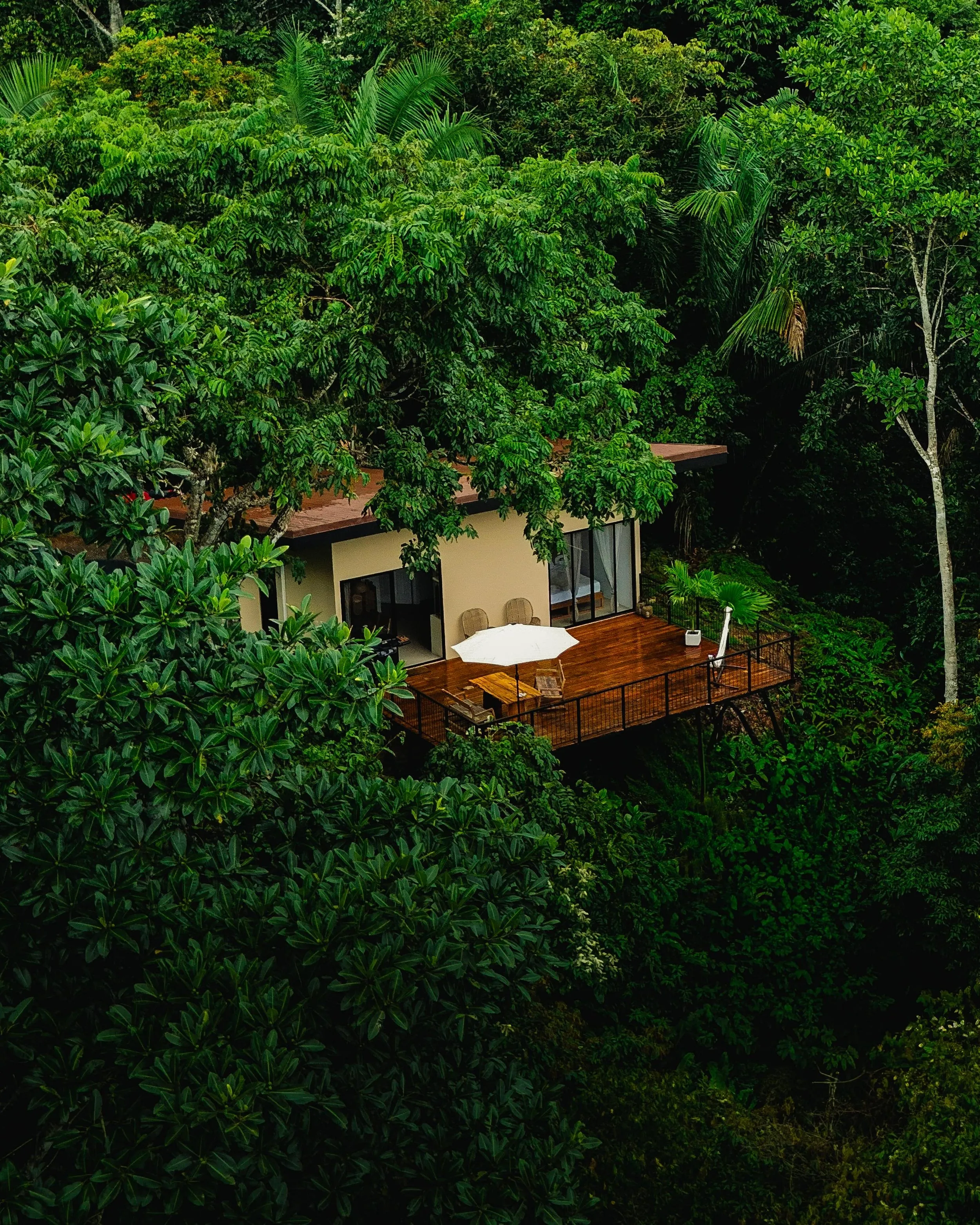
There is no bad month on the Osa Peninsula, but there are months that suit different people, and anyone who tells you “come in the dry season” is giving you half an answer. The whales are here in the wet season. So are the turtles. The forest is at its loudest and greenest when it rains, and the crowds and the prices are at their lowest. The dry season gives you firmer trails, easier roads and blue mornings — at high-season rates, with Corcovado permits sold out weeks ahead.
We live here year round, five kilometres outside Puerto Jiménez. This is the honest month-by-month version.
The short answer
- Best weather: January to March. Blue skies, firm trails, easiest roads.
- Best wildlife value overall: late June to early September — whales in the gulf, green forest, half the visitors, lower prices.
- Best for whales: August to October (southern humpbacks, the big season) and December to March (northern humpbacks).
- Best for turtles: July to December, peaking September to November.
- Quietest and cheapest: September and October.
- The one month we would think twice about: October — the wettest month, the worst roads, and Sirena station inside Corcovado closes for maintenance.
Two seasons, and what they actually mean
Costa Rica calls December to April the dry season and May to November the green season. On the Osa, “dry” is relative: this is one of the wettest corners of the country, somewhere between 3,500 and 5,500 mm of rain a year depending on where you stand, and the rainforest is a rainforest for a reason.
What actually changes month to month is not whether it rains, but when and how much. Through most of the green season, mornings are clear. Rain arrives in the afternoon, hard and warm, for an hour or three, and then the forest steams and the frogs start. You plan your day around it — tours in the morning, hammock in the afternoon — and it costs you almost nothing.
Temperature barely moves all year: roughly 24°C at night, 30–32°C in the afternoon, with humidity that makes both feel warmer. There is no cold season. There is no bad-light season either; the light here is extraordinary in every month.
Month by month
January
Peak dry season and, for many people, the perfect month: clear mornings, dependable afternoons, firm trails, the gravel roads at their best. Northern humpback whales are still in the Golfo Dulce with calves. Corcovado is busy and permits for Sirena go fast — book six to eight weeks ahead. Prices are at their highest.
February
The driest month of the year, and the easiest travel month on the peninsula. Wildlife concentrates around the remaining water, which makes river trails productive. Scarlet macaws are noisy and everywhere. Same caveats as January: busy, and permits are the bottleneck, not the beds.
March
Hot, bright and dry, with the sea at its most swimmable and the best snorkelling visibility of the year in the gulf. Trees drop leaves in the drier forest, which makes spotting monkeys and sloths noticeably easier. A superb month if you can handle the heat of the middle of the day.
April
The end of the dry season and one of our favourite windows. The first rains usually arrive late in the month and the forest reacts immediately — everything greens up, frogs return, insects explode, birds start nesting behaviour. Crowds thin out after Easter and prices soften. If you want dry-season conditions without dry-season company, come in the second half of April.
May
The green season begins in earnest. Afternoon storms, spectacular ones, and mornings that are usually clear. The peninsula empties out. This is the start of the best-value stretch of the year, and the forest has never looked better than it does in the weeks after the rains return.
June
Warm, wet, green and quiet. Towards the end of the month the first southern-hemisphere humpback whales begin arriving in the Golfo Dulce from the coast of South America. Trails are muddy; the wildlife does not care and neither should you, in the right shoes.
July
Often a slightly drier pocket in the middle of the green season — locals call it the veranillo, the little summer — with whale numbers building in the gulf and olive ridley turtles starting to come ashore on the Pacific beaches. School holidays bring a modest bump in visitors, but nothing like the dry season. One of the best all-round months to be here.
August
Whale season proper. Southern humpbacks are in the Golfo Dulce with newborn calves, and the gulf's sheltered fjord water means calm boat days when the open Pacific is rough. Green, warm, alive, and still comfortably outside the crowds. If someone asked us to pick a single month for wildlife-per-dollar, this would be it.
September
Wet, and worth it. The rain steps up — expect proper afternoon downpours and some all-day rain — but this is peak turtle nesting, peak whale watching, the quietest lodges of the year and the lowest prices. Rivers run high, waterfalls are at full volume, and the forest is deafening at night. Bring a rain jacket and a sense of humour.
October
The wettest month on the Osa. Roads suffer, some businesses close, and Sirena station inside Corcovado shuts for annual maintenance. It is also, for the same reasons, the most solitary and dramatic month here — and turtle and whale activity continues. We are honest with guests: if this is your only trip to Costa Rica, choose another month. If you want the peninsula almost to yourself and you do not mind mud, October rewards you.
November
The turn. The first half stays wet; by the second half the rain is easing, the skies open, and the landscape is at its greenest before the dry-season dust arrives. Prices are still low and the parks are quiet. A quietly excellent time to come, and a favourite among repeat visitors.
December
The dry season returns, the northern humpbacks arrive, and everything gets busy from about the 18th. Early December is one of the sweetest spots in the calendar: dry-season weather, green-season emptiness. Late December is peak season, peak prices and fully booked — plan it months ahead.
The wildlife calendar
What is happening, and when:
- Humpback whales, southern population: roughly July to November, peaking August to October. The larger of the two seasons.
- Humpback whales, northern population: roughly December to March. The Golfo Dulce is one of very few places on Earth where both populations come to calve.
- Dolphins: resident in the gulf all year — bottlenose and spotted.
- Olive ridley turtles: nesting on the peninsula's Pacific beaches from about July to December, peaking September to November.
- Scarlet macaws: all year, every day, in pairs. The Osa holds one of the largest populations in Central America.
- Four monkey species: all year. Squirrel monkeys travel in big troops; howlers wake you at 5.40 am regardless of season.
- Frogs and night life: best in the green season, when the rain brings everything out. A night walk in September is a different experience from one in February.
- Bioluminescence: all year, best on dark nights around the new moon.
- Nesting and courtship for many birds: the dry season into early rains, roughly January to May.
Roads, boats and what the season does to logistics
This matters more on the Osa than in most of Costa Rica, because the last stretch of almost everything here is gravel.
- Dry season: a high-clearance vehicle is enough for most routes. The road to Carate — for La Leona and the southern beaches — is at its most passable.
- Green season: take a proper 4x4. River crossings rise, gravel washes out, and the section of Route 245 towards Puerto Jiménez develops holes worth respecting. September to November is when flooding is most likely.
- Boats: the Golfo Dulce is a sheltered tropical fjord, so boat days are calm far more often than the open Pacific. This is why whale watching here holds up in the wet months.
- Flights: the Puerto Jiménez airstrip takes daily flights from San José all year; wet-season afternoons occasionally shuffle schedules, so we suggest morning flights.
If the road is what worries you, it need not: we pick guests up in Puerto Jiménez for free, in any weather, in any month.
What we would book, if we were you
- First trip to Costa Rica, want it easy: February or early March. Add Corcovado permits the day you book your flights.
- Wildlife above all, best value: late July to mid-September. Whales, turtles, green forest, quiet trails.
- Honeymoon or something slow: late April, May, or the second half of November. Empty, green, cheap, and the light after rain is unreasonable.
- Family with children: December to March for comfort and simpler logistics; July and August if the whales are the draw.
- Photographers and birders: January to April for access and light; May to July for behaviour and nesting.
Frequently asked questions
What is the rainy season like on the Osa Peninsula?
Mornings are usually clear; rain tends to arrive in the afternoon and evening, heavily but briefly, for most of the green season. September, October and early November are the genuinely wet months, where all-day rain happens and rivers run high.
Is it worth visiting the Osa Peninsula in the rainy season?
Yes — for wildlife, it is arguably better. Whales and turtles are here, the forest is at its most active, lodges cost less, Corcovado permits are available at short notice, and you will share the trails with almost nobody. You will get wet. That is the trade.
When can you see whales in the Golfo Dulce?
Humpbacks are in the gulf around eight months of the year: the southern population from about July to November, the northern population from about December to March. Peak sightings are August to October. Our Golfo Dulce boat tour runs all year.
What is the driest month on the Osa Peninsula?
February, followed by January and March.
What is the wettest month?
October, with September and November close behind.
When should I book Corcovado?
For December to April, four to eight weeks ahead — Sirena sells out first, and 2026 has had reduced daily capacity there. For the green season, one to three weeks is usually enough. The full picture is in our Corcovado guide.
Do I need a 4x4 on the Osa Peninsula?
In the dry season, high clearance covers most needs. In the green season, yes — take the 4x4, particularly if you plan to drive to Carate or Matapalo.
How hot is it?
Around 24°C at night and 30–32°C by afternoon, all year, with high humidity. There is no cool season; there is shade, and a pool, and the sensible local habit of doing nothing between one and three.
Where to stay, whichever month you choose
We are ten minutes from Puerto Jiménez, on the corridor animals use to move between Corcovado and the Tranquility reserve, with four private lodges from $110 a night, solar power, our own well water, and terraces that do a lot of the wildlife watching for you. Tell us your month and what you want to see, and we will build the days around it — tours, permits, guides and all.
Read it from the terrace.
Four private lodges from $110 a night.