 Maze Lodge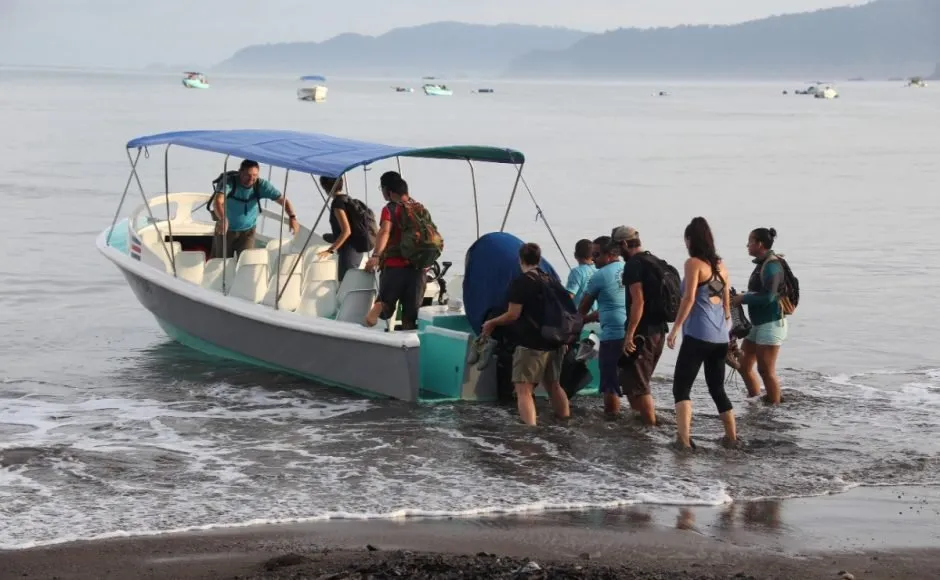
Corcovado is the reason most people come to the Osa Peninsula. It is also the trip people get wrong most often — wrong entrance, wrong month, wrong expectations, permits bought too late. We live ten minutes from the pier the boats leave from, and we book this park for guests every week of the year, so this is the guide we wish existed: what Corcovado actually is, which of the five entrances suits you, what a day inside really looks like, what it costs, and what is going on with the park in 2026.
The short version
- Where: the Osa Peninsula, southern Pacific Costa Rica. The park covers roughly 424 km² (164 sq mi) — almost half the peninsula.
- Why it matters: the largest remaining lowland tropical rainforest on the Pacific coast of Central America, and home to something in the order of 2.5% of the planet's biodiversity.
- A guide is mandatory. You cannot walk into Corcovado alone. Every visitor must be accompanied by a certified guide.
- Entrance fee: about $15 per person per day for non-resident adults, paid to SINAC, the national parks authority. A full guided day tour from Puerto Jiménez runs around $175 per person including the permit, guide, transport and food.
- Five entrances: Sirena, La Leona, El Tigre, Los Patos and San Pedrillo. They are completely different days out.
- Book early. Permits are capped per station per day and sell out weeks ahead in high season (December–April).
- Sirena closes every October for maintenance, and in 2026 it has been running under reduced daily capacity — see below.
What Corcovado is — and what it is not
Corcovado is not a manicured park with a visitor centre and a paved loop. There are no roads inside it. There is no fence keeping the animals in, and no guarantee they will show up. What there is: primary rainforest that has never been cut, running from mountain ridge down to an empty Pacific beach, with a density of large mammals you will not find anywhere else in Costa Rica.
That density is the point. Elsewhere in the country you see monkeys and iguanas. In Corcovado you have a genuine chance of Baird's tapir — the largest land mammal in Central America — of a herd of white-lipped peccaries crossing the trail, of a troop of squirrel monkeys forty strong, of scarlet macaws in the beach almonds all day long. It is one of the last strongholds of the jaguar in Central America, though the honest number of guests who see one is close to zero.
It is also hot, humid, muddy and long. A day tour is six to eight hours of walking in tropical heat. People who enjoy it come prepared for that; people who expected a stroll do not.
Corcovado in 2026: what has changed
2026 has been an unusual year for the park, and most guides online have not caught up.
Sirena, the station deep inside the park, has had its wastewater treatment repeatedly flagged by the health authorities. In response, SINAC has cut and re-cut the daily visitor cap through the year: from 150 a day, briefly up to 225, then down to around 100 a day for August and September, split between day visitors and overnight guests. Environmental organisations placed the park under a public “red alert” in August 2026 over sewage and crumbling infrastructure. The repair work is scheduled for the annual October closure, and the stated goal is full operation at Sirena from 1 December 2026.
What that means for you, in practice:
- Permits for Sirena are genuinely scarce right now. Fewer slots per day, same demand. Book weeks ahead, not days.
- The other entrances are not affected the same way. La Leona, El Tigre, Los Patos and San Pedrillo have their own capacities and their own days out.
- Anything you read about caps and closures has a shelf life. The numbers above were correct in August 2026 and have already changed twice this year. Before you build a trip around Sirena, have someone with a phone in Puerto Jiménez check the live availability. That is a large part of what we do for guests.
The five entrances, honestly compared
Sirena — the famous one
Sirena sits in the heart of the park, on the coast, reachable only by boat or by a long multi-day hike. From Puerto Jiménez it is a 90-minute boat ride down the outside of the peninsula, leaving the pier at 5 am. You walk the network of flat trails around the station with your guide, eat lunch at the station, and take the boat back in the afternoon.
Best for: wildlife density. This is where the tapirs sleep near the station, where the peccary herds move, where the odds of a genuinely remarkable sighting are highest.
Effort: moderate — the trails are flat, but you are walking four to five hours in heat and humidity.
Watch out for: the early start, the boat landing (you get out in shallow surf; dry bags matter), and permit scarcity.
La Leona — the southern gate
La Leona sits at the park's southern corner, near the village of Carate. From Puerto Jiménez you drive about two hours down a gravel road to Carate, then walk roughly 40 minutes along the beach to the ranger station, and continue into the forest from there. Tide matters on this walk, which is why the departures are early and fixed.
Best for: people who would rather drive than boat, and who like the mix of beach and forest. Scarlet macaws in the beach almond trees are close to a given.
Effort: the highest of the day trips — beach walking in soft sand and full sun is hard work.
Watch out for: the road to Carate in the wet months, and sun exposure on the beach section.
El Tigre — the one nobody tells you about
El Tigre is the newest sector, opened in 2015, above the village of Dos Brazos de Río Tigre — about 25 minutes from Puerto Jiménez, which makes it the easiest entrance to reach in the whole park. It is a circuit through steep secondary and primary forest along the Tigre river, run with community guides from the village, with hanging bridges and river crossings.
Best for: a shorter day, a smaller budget, and putting money directly into a village that used to live off gold mining.
Effort: steep in places, plenty of climbing, but no 5 am boat.
Watch out for: expectations. The large-mammal odds are lower than Sirena. The birding, frogs, insects and forest itself are excellent.
Los Patos — the trekker's entrance
Los Patos, inland near La Palma, is mainly used as the start or end of the classic multi-day traverse to Sirena (roughly 20 km of forest trail). It is not a practical day trip from Puerto Jiménez.
Best for: fit hikers doing the two- or three-day crossing with overnight stays at Sirena.
San Pedrillo — the Drake Bay side
San Pedrillo sits at the park's northern corner and is visited from Drake Bay, on the other side of the peninsula, usually combined with a waterfall. If you are based in Puerto Jiménez, this is not your entrance.
Which entrance should you choose?
- One day, and you want the best possible wildlife: Sirena by boat. Book it before anything else in your trip.
- One day, you get seasick, or Sirena is full: La Leona. Macaws, beach, forest, and a proper adventure.
- Half a day, tighter budget, or a rest day between big ones: El Tigre.
- You want to sleep inside the park: Sirena overnight — bunks and meals at the station, night sounds, dawn on the trails. Book far ahead; overnight slots are the scarcest of all.
- You are already in Drake Bay: San Pedrillo, or a boat to Sirena from that side.
What a day at Sirena actually looks like
Alarm at 4 am. We drive you to the Puerto Jiménez pier for a 5 am departure, in the dark, with the gulf flat and the frigatebirds already up. The boat runs about 90 minutes down the coast. You land on the beach at Sirena — shoes off, dry bag over the shoulder — and are on the trail by 7 am, before the heat.
Then it is walking. Slow walking, the way naturalist guides walk: twenty steps, stop, listen, point a telescope at something you would have walked straight past. Spider monkeys overhead. A tamandua working a termite nest. Poison-dart frogs the size of a thumbnail on the leaf litter. If the day is generous, a tapir asleep in the mud near the station, entirely unbothered by you.
Lunch at the station, a rest through the hottest part of the day, another shorter walk, and the boat back mid-afternoon. You will be on your terrace by five, sunburnt, filthy, and quiet in the way people are after a genuinely big day.
What you will actually see
Honest odds, based on what our guests come back with:
- Near-certain: howler and spider monkeys, scarlet macaws, coatis, hermit crabs, leafcutter ants, several bird species you will not have heard of, at least one snake if your guide is good.
- Likely: capuchins, squirrel monkeys, agoutis, poison-dart frogs, toucans, a caiman in the lagoon, peccary sign if not the herd itself.
- Possible on a good day at Sirena: Baird's tapir, anteater, peccary herd, bull sharks in the river mouth.
- Rare: ocelot, tayra, harpy eagle.
- Effectively never: jaguar or puma. They are there. Camera traps prove it. They see you.
Two things move the odds more than luck: going with a guide who works the park constantly, and going early. Wildlife activity collapses in the middle of the day, which is exactly when the unprepared are still walking.
What it costs
- Park entrance: around $15 per person per day for non-resident adults, less for children, paid to SINAC with the permit.
- Certified guide: roughly $80–$120 per group per day if you hire one directly.
- Boat to Sirena: the largest single cost on that route, shared across the group.
- Full guided day tour from Puerto Jiménez: about $175 per person, everything included — permit, guide, boat or 4x4, lunch and water. That is what our Corcovado day tour costs, with Josh on the boat to Sirena or Luis driving to La Leona.
- Overnight at Sirena: add bunk and meals at the station, on top of the day-tour elements.
Booking the components separately rarely saves money once you have paid for the boat, and it puts the permit risk on you.
Permits: how it really works
Permits are issued by SINAC, capped per station per day, and tied to a certified guide. In practice almost everyone books through a guide or a lodge that holds the reservation for them, because the process is easier from inside the country and the caps are the real constraint.
Timing:
- December–April (high season): book four to eight weeks ahead. Sirena sells out first.
- May–August: one to three weeks is usually fine.
- September–November: quieter, but October closes Sirena entirely, and the roads are at their worst.
Bring your passport. It is checked at the station.
When to go
The park is open year round, with the October caveat. The dry months, December to April, give you firmer trails, easier roads and the highest chance of a rain-free day — and the highest prices and fullest permits. The green months are wetter but the forest is louder, the rivers run, and mornings are frequently clear even in the wet season; most rain arrives in the afternoon. We have written the whole month-by-month picture in our guide to the best time to visit the Osa Peninsula.
What to bring
- Closed walking shoes you do not mind ruining. Trail runners beat heavy boots in this heat.
- Two litres of water per person, minimum.
- Rain jacket, however blue the sky is at 5 am.
- Sunscreen and a hat — the beach sections are merciless.
- Insect repellent.
- A dry bag for the boat landing, with your camera and passport inside it.
- Binoculars if you own them. Your guide will have a telescope.
- Swimwear, and a change of clothes left in the car or at the lodge. You will want it.
Mistakes we watch people make
- Leaving the permit to the last week in February. The single most common way to miss Corcovado entirely.
- Booking Sirena the morning after a long travel day. A 4 am start after arriving at 9 pm is a poor way to see a rainforest.
- Treating it as the only day out. The Osa is not only Corcovado — the Golfo Dulce on the other side of town holds whales for eight months of the year.
- Under-estimating the heat. Two litres, not one.
- Skipping the night before. A night walk the evening before Corcovado is how you learn to see; the difference in what people notice the next day is remarkable.
Frequently asked questions
Can you visit Corcovado without a guide?
No. A certified guide is mandatory for all visitors, at every entrance. It is a park rule, not an upsell, and it exists because people got lost and injured when it was not.
How much does Corcovado National Park cost?
The entrance fee is around $15 per person per day for non-resident adults. A complete guided day tour from Puerto Jiménez, with permit, guide, transport and food included, is about $175 per person.
Is Corcovado closed in October?
Sirena station closes every October for maintenance. Other sectors keep their own schedules, but October is also the wettest month on the peninsula, so it is the one month we would not build a trip around.
How do you get to Corcovado from Puerto Jiménez?
Three ways: by boat from the Puerto Jiménez pier to Sirena (90 minutes), by 4x4 to Carate and on foot to La Leona (two hours plus a beach walk), or by car to Dos Brazos for the El Tigre circuit (25 minutes). All three start early.
Is one day in Corcovado enough?
One day at Sirena is enough to see why the park is famous. Two days — one at Sirena, one at La Leona or El Tigre — is the version people come back raving about. Anything beyond that and you should be considering the overnight stay or the traverse from Los Patos.
Can children visit Corcovado?
Yes, with realism about distance and heat. El Tigre or a half-day at La Leona works better for younger children than a full Sirena day. Guides here are used to families and will adjust the pace.
Will I see a jaguar?
Almost certainly not. Roughly a handful of guests a year, across the whole peninsula, get a glimpse. Tracks in the morning mud are much more common — and, honestly, satisfying in their own way.
Drake Bay or Puerto Jiménez for Corcovado?
Drake Bay is closer to San Pedrillo and slightly closer to Sirena by boat. Puerto Jiménez has road access, an airstrip with daily flights from San José, supermarkets, ATMs and three different entrances within an hour — La Leona, El Tigre and the Sirena boat. If you want flexibility, Puerto Jiménez wins; if you want remoteness, Drake Bay does.
Where to stay
You want to sleep close to the pier and close to the start of the road to Carate, because every Corcovado day starts before dawn. Maze Lodge is 5.8 km from Puerto Jiménez, ten minutes from the pier, on a wildlife corridor between the national park and the Tranquility reserve — which means the wildlife watching begins on your own terrace, with coffee, before you have gone anywhere. We have four private lodges from $110 a night, and we book the park for you: permits, guide, the 5 am transfer, all of it.
Message us on WhatsApp with your dates and we will tell you honestly what is available at Sirena that week — and what we would do instead if it is full.
Read it from the terrace.
Four private lodges from $110 a night.