 Maze Lodge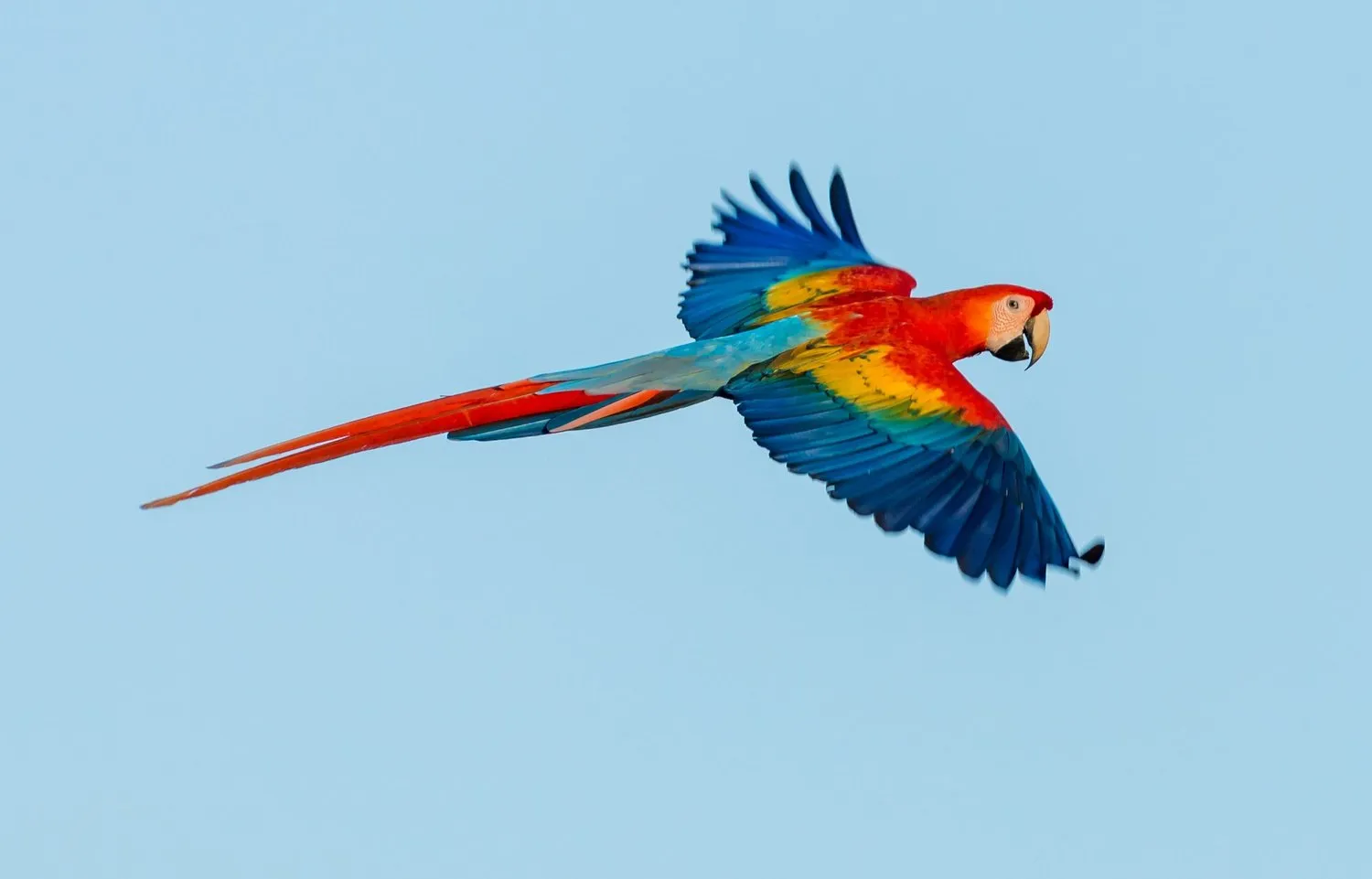
You hear them before you see them: a raw, unmusical shriek that carries half a kilometre, and then two red shapes crossing the gap above the road, always two, always slightly out of step with each other. Scarlet macaws are the Osa Peninsula's signature animal, and unlike most signature animals, you are almost guaranteed to see them.
This is where to look, when to look, and why there are so many here when there are so few elsewhere.
The short answer
- Where: the beach almond trees along any coast, the football field in Puerto Jiménez, the road to Carate, and the ridges above the lodges at dusk.
- When: all year. Early morning and late afternoon are the flight hours; the middle of the day they feed quietly.
- Odds: very high. Most guests see them on their first day without trying.
- Cost: nothing. This is the best free wildlife on the peninsula.
Why the Osa has so many
Costa Rica's scarlet macaw population collapsed through the twentieth century — habitat loss, and a poaching trade in chicks taken from nest holes. In most of the country they disappeared entirely.
Two things saved them here. The first is the beach almond, a coastal tree whose fruit is a macaw staple and which grows in a near-continuous ribbon along the peninsula's shoreline. The second is that Corcovado and the reserves around it protected enough big old trees with the deep cavities macaws need for nesting — they cannot excavate their own, so they depend on holes that take decades to form.
The result is one of the largest remaining populations in Central America, and a bird that has gone from rare to routine within living memory. The people who guide you here remember when that was not true.
Where to see them
The football field in Puerto Jiménez
Free, ridiculous, and reliable. The almond trees around the pitch fill up in the late afternoon with pairs screaming at each other. Buy a cold drink at the supermarket, sit on the wall, and watch for half an hour. It is one of the best things in town and costs nothing.
The beaches
Playa Platanares, and anywhere along the coast where beach almonds grow. Early morning is best — the birds feed before the heat, and the light is on your side.
The road to Carate
The two-hour drive south towards the La Leona entrance passes through macaw country the whole way. On any given trip you will see dozens, often at eye level as they cross the road.
Inside Corcovado
Constant. At Sirena and La Leona they are part of the soundtrack rather than an event.
From a terrace
Ours face the ridge, and pairs cross it most evenings on their way to roost. That is the version we like best: no drive, no plan, a drink in hand.
When to look
- 5.30–8.30 am: feeding and moving. The most active window, and the best light.
- Midday: quiet. They sit in the canopy and eat. You will hear them and see very little.
- 4–6 pm: the commute. Pairs and small groups crossing to roost sites, often high and fast, calling constantly.
- Season: present all year. Nesting runs broadly from the dry season into the early rains, roughly December to May — during which pairs are tied to a nest tree and easier to find in one place.
How to watch them properly
- Listen first. You will hear a pair long before they appear. Look for the direction of the call and wait.
- Look at fruiting trees, not at the sky. Feeding birds are quiet and surprisingly hard to spot in the canopy despite being scarlet.
- Binoculars change everything. At a distance they read as red silhouettes; through glass you get the blue and yellow wing panels and the enormous pale bill.
- They fly in pairs. If you see one, the mate is usually within a few metres. Macaws pair for life, which is why the sky here always seems to come in twos.
- Never feed them, and be wary of any place that does. Fed macaws lose their wariness and become targets.
Photographing them
Hard, and worth trying. They are fast, high and usually backlit against a bright sky. What works: shoot early or late when the light is low and warm, use a long lens, pre-focus on a fruiting tree and wait rather than chasing flight shots, and accept that your best photograph will probably be two birds in silhouette against an orange sky. That is the image everyone actually keeps.
What else you will see while looking
Macaw hunting puts you in exactly the right places at exactly the right times for everything else: toucans and fiery-billed aracaris in the same fruiting trees, monkeys moving through at dawn, and the whole coastal cast on the beaches. Our wildlife guide covers the rest, and the river walk — free for guests — is a good way to learn to see the canopy properly.
Frequently asked questions
Where is the best place to see scarlet macaws in Costa Rica?
The Osa Peninsula and the central Pacific around Carara. On the Osa they are an everyday sight rather than a special trip.
What time of day are scarlet macaws most active?
Early morning and late afternoon. Around dawn they feed and move; from four o'clock they fly to roost, calling as they go.
Are scarlet macaws endangered in Costa Rica?
They were driven close to disappearing from most of the country by habitat loss and poaching of chicks. The Osa population is now one of the healthiest in Central America, which is a genuine conservation success and a fragile one — see our piece on conservation on the Osa.
Do you need a tour to see them?
No. They are visible from public roads, beaches and the town football field. A guide helps you find nests and feeding trees, not the birds themselves.
Why do macaws always fly in pairs?
They mate for life and stay together year round, flying, feeding and roosting as a pair. Groups you see are usually several pairs, not a flock.
What do scarlet macaws eat here?
Beach almonds are the staple, along with a range of forest fruits and seeds. That coastal almond ribbon is a large part of why the peninsula holds so many.
Watch them from your own terrace
Maze Lodge sits on a ridge between Corcovado and the Tranquility reserve, and macaws cross it most evenings. Four private lodges from $110 a night, each with a terrace over the canopy — and a hammock positioned, entirely on purpose, facing the flight path.
Read it from the terrace.
Four private lodges from $110 a night.