 Maze Lodge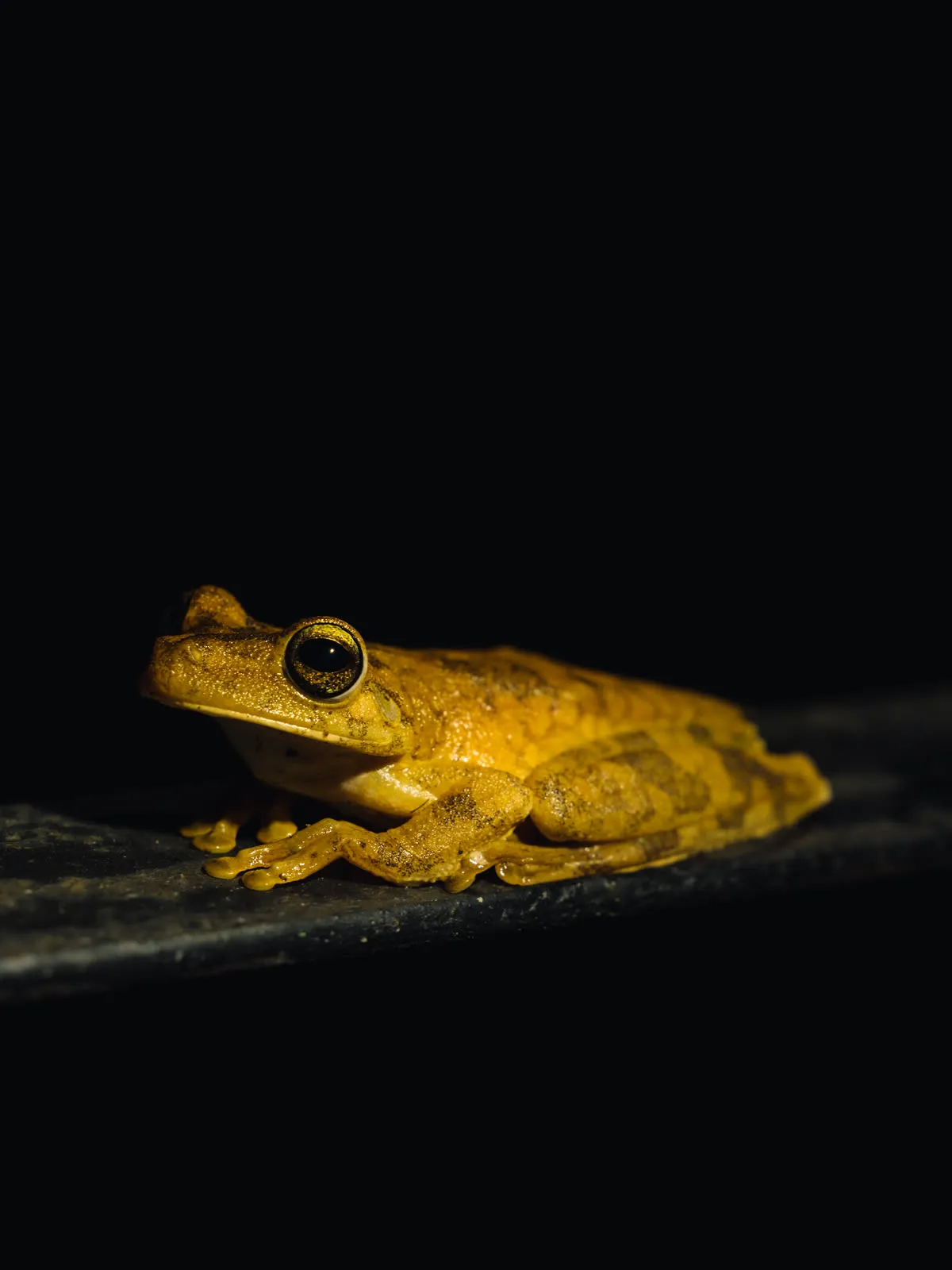
Around six o'clock the forest hands over. The birds stop, the cicadas start, and a completely different set of animals comes on shift — most of the rainforest's mammals, nearly all its amphibians, and the invertebrates that make people who claim to dislike insects change their minds.
A night walk is the cheapest, easiest and most consistently astonishing wildlife experience on the Osa. It is also the one we tell guests to do first, and there is a reason for that.
The short answer
- What: a guided walk on forest trails with torches, roughly two hours, after dark.
- Cost: $50 per person on our own trails — the night walk.
- When: all year. The green season, May to November, is noticeably better — rain brings out the amphibians.
- Bring: closed shoes, long trousers, a head torch, repellent.
- Do it on your first evening, not your last.
Why the first evening
Because a night walk teaches you to look. In two hours a naturalist shows you where a frog sits on a leaf, how eyeshine works, what a moving branch means, and how much is happening inside one square metre of understorey. Guests who do it early notice dramatically more for the rest of the week — on the terrace, in Corcovado, everywhere. Guests who leave it to the last night spend the walk saying “I wish we had done this on Monday”.
It is the single highest-leverage $50 in your trip.
What you actually see
Frogs
The stars. Red-eyed tree frogs are the poster animal and genuinely look unreal in a torch beam. Glass frogs sit on leaves above streams with their organs visible through translucent skin. Poison-dart frogs — including the Golfo Dulce poison frog, a speciality of this corner of Costa Rica — are around by day too, but the night is when the chorus starts.
Scorpions under UV
The reliable party trick. Scorpions fluoresce an unearthly blue-green under ultraviolet light, and a guide sweeping a UV torch across the leaf litter turns an ordinary patch of ground into something from a different planet. Nobody expects this and everybody remembers it.
Snakes
Most rainforest snakes are nocturnal, which is why night walks find them and day walks rarely do. Usually harmless species; occasionally an eyelash viper coiled on a branch at head height, beautifully camouflaged and entirely uninterested in you. Your guide will keep the distance sensible — more on that in our snakes and safety guide.
Mammals
Kinkajous and olingos working the fruiting trees, opossums, occasionally a tamandua anteater tearing into a termite nest, and the eyeshine of things that do not stay long enough to identify. Night walks turn up mammals that day walks never do.
Insects, spiders and the rest
Moths the size of your hand. Stick insects that are indistinguishable from sticks until they walk. Tarantulas in burrows. Leafcutter ants running their highways at full volume. Katydids doing impressions of leaves. If your idea of a good time does not currently include invertebrates, an hour with a good guide will adjust that.
How a night walk works
Ours starts from the lodges at dusk and runs about two hours on our own trails through the corridor between Corcovado and the Tranquility reserve. You walk slowly, in a small group, with torches. The guide sweeps the understorey ahead and stops constantly — most of what you see would be invisible to you three metres away.
The pace is gentle. This is not a hike; it is a slow scan of a small area, which is exactly why it works. And because it starts at the lodges, you are back on your terrace ten minutes after it ends rather than in a van.
What to bring
- Closed shoes. Not sandals, not flip-flops.
- Long trousers and preferably long sleeves.
- A head torch — hands free matters. We have spares if you forgot.
- Insect repellent, applied before you leave.
- A camera you can hold in one hand. Phone photos of frogs work far better than you would expect at close range.
Photography, honestly
Frogs, snakes and insects photograph well at close range because they sit still. Use your guide's torch as the light source rather than your flash where possible — direct flash into the eyes of a nocturnal animal is unkind, and most guides will ask you not to. Anything moving, or anything more than a couple of metres away, is not going to work, and that is fine.
When to go
- Green season (May–November): the best. Rain means amphibians, and the forest is loud. September and October are peak frog months.
- Dry season (December–April): still excellent, with fewer frogs and more insects and mammals.
- Moon phase: darker nights are marginally better, but it matters far less than for bioluminescence.
- After rain is the single best condition. If it has just stopped raining at dusk, go.
Is it safe?
Yes, with the obvious care. You walk with a guide who knows the trails, on a marked route, in closed shoes, with light. The realistic risks are a slip in mud and a mosquito bite. Venomous snakes exist here and are the reason for the shoes and the torch and for not putting your hands where you cannot see — incidents involving guided visitors are very rare, and essentially always involve someone touching something.
Frequently asked questions
What animals come out at night in the Costa Rican rainforest?
Frogs of many species, most snakes, scorpions, tarantulas, moths and stick insects, plus kinkajous, olingos, opossums, anteaters and owls. Most rainforest mammals are nocturnal.
How long is a night walk?
About two hours, starting at dusk. Ours runs from the lodges, so there is no transfer at either end.
How much does a night walk cost on the Osa?
$50 per person on our private trails, with a naturalist guide.
Can children do a night walk?
Yes, and they usually love it. Two hours at a slow pace with torches is well within range for most children over about six.
Do I need my own torch?
A head torch is ideal and we have spares. Your guide carries the strong light and a UV torch for the scorpions.
Is a night walk better than a day walk?
They find completely different animals. If you only do one guided walk, do the night one — it changes how you see everything afterwards. Ideally do both: our river walk in the morning is free for guests.
It starts at your door
Maze Lodge sits inside primary forest on a wildlife corridor, so the night walk begins where you are standing. Four private lodges from $110 a night — and after the walk, a terrace, the dark, and a forest making a truly extraordinary amount of noise.
Read it from the terrace.
Four private lodges from $110 a night.