 Maze Lodge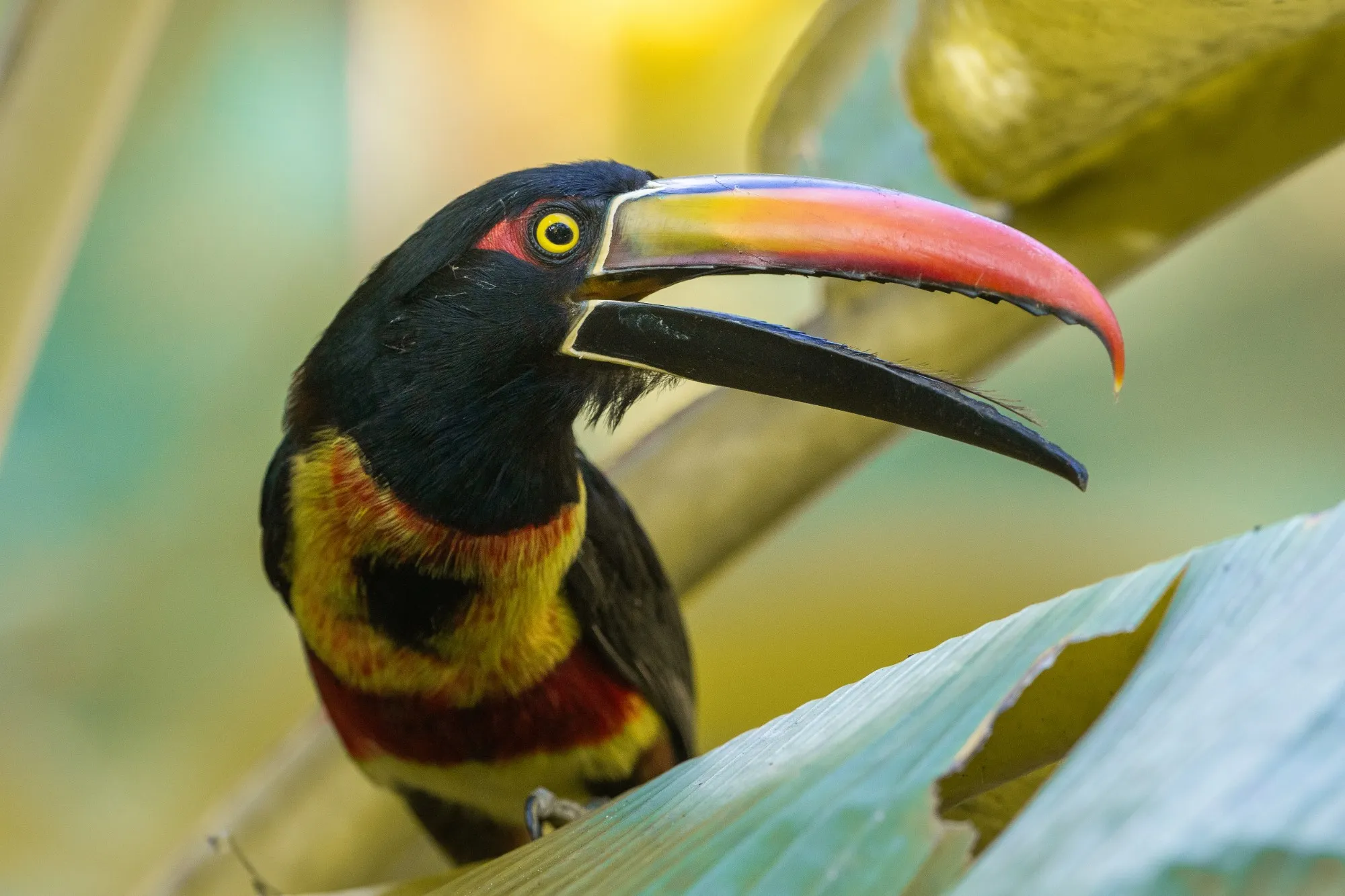
Over 460 bird species have been recorded on the Osa Peninsula, in an area you can drive across in an hour. More usefully for a visiting birder: several of them are found almost nowhere else, the habitats sit close together, and you can work three of them before lunch without moving your car twice.
This is a starting plan for a first birding trip here — what to target, where to be at dawn, and what a realistic list looks like.
The short answer
- Species: 460-plus recorded on the peninsula.
- The regional specialities: fiery-billed aracari, black-cheeked ant-tanager, Baird's trogon, riverside wren, golden-naped woodpecker, turquoise cotinga, yellow-billed cotinga, mangrove hummingbird.
- Best months: December to April for access and light; May to July for breeding behaviour and song; September to November for migrants and green-season abundance.
- Best hours: 5.30–9 am. Then again from four.
- A realistic first trip: 120–180 species over four or five days with a local guide.
The birds people come for
Fiery-billed aracari. The small toucan with the flame-coloured bill, effectively restricted to the Pacific slope of southern Costa Rica and western Panama. Common here, in fruiting trees at breakfast height.
Black-cheeked ant-tanager. Endemic to the Osa Peninsula and nowhere else on Earth. Understorey skulker, best found by voice — a genuine reason people book this trip.
Baird's trogon and golden-naped woodpecker, two more southern Pacific specialities that are straightforward here and hard elsewhere.
Yellow-billed and turquoise cotingas. Both scarce, both possible, both the sort of bird that makes a week.
Scarlet macaws, in numbers that no longer feel special after three days — see the macaw guide.
Yellow-throated toucan, chestnut-mandibled toucan, trogons, motmots, manakins, honeycreepers, tanagers, antbirds, woodcreepers — the everyday cast, and the reason lists here climb fast.
The habitats, and what each one gives you
Forest edge and gardens
The most productive hours of your trip will be spent standing still at an edge with a coffee. Tanagers, honeycreepers, hummingbirds, aracaris, woodpeckers, flycatchers. Every lodge terrace on this peninsula is a hide, ours included.
Primary forest interior
Harder, quieter, and where the specialities live: ant-tanagers, antbirds, woodcreepers, ground-cuckoos if fortune is extraordinary. Slow walking and a good ear are what work. The corridor forest here and the trails inside Corcovado both deliver.
Mangroves
The Platanares and Preciosa estuaries near Puerto Jiménez: mangrove hummingbird, mangrove warbler, herons, ibis, kingfishers, and a completely different set from anything inland. Best paddled at high tide, early.
The gulf and coast
Frigatebirds, pelicans, ospreys, terns, shorebirds on the mudflats, and a chance of yellow-billed cotinga around the mangrove edges. The boat morning doubles as a seabird trip.
Higher ground and the road to Carate
Different again, with raptors overhead and the peninsula's ridges as the backdrop.
A four-day plan that works
- Day 1: arrive, then bird the lodge edge from four in the afternoon. Get your common species out of the way where they are easy.
- Day 2: dawn on private forest trails with a naturalist — our river walk is free for guests — then mangroves at high tide. Afternoon off.
- Day 3: Corcovado. El Tigre if you want forest interior and steep trails; La Leona if you want coast, macaws and open beach edge. The entrances guide compares them.
- Day 4: the road south to Carate at first light, or a boat morning on the gulf. Late afternoon back at the edge for whatever you are still missing.
Add days rather than sites. The mistake visiting birders make here is treating the Osa as a checklist to drive around; the peninsula rewards sitting in one good place for three hours.
Practical notes
- Hire a local guide for at least two mornings. The specialities are found by voice, and the people who guide here know the calls, the territories and the fruiting trees. Nothing you can read replaces that.
- Binoculars and a scope if you have one. Canopy work is most of the day.
- Rain gear that packs small, and a dry bag for optics. Humidity here fogs lenses — keep silica gel in the bag.
- Neutral clothing, closed shoes, and repellent for dawn and dusk.
- Do not play recorded calls repeatedly, particularly near nesting territories. Guides here are increasingly strict about it, and rightly.
- eBird works offline once you download the region — and your checklists genuinely help, because the peninsula is under-covered.
The honest bit
The Osa is not the easiest birding in Costa Rica. Monteverde and the Caribbean lowlands hand you more species per hour with less sweat, and the quetzal is not here. What the Osa gives you instead is a set of birds you cannot get elsewhere, inside a landscape where you may look up from a woodcreeper to find a tapir looking back, and where a morning's list comes with four monkey species attached.
Come for the specialities and the wildness, not for the numbers.
Frequently asked questions
How many bird species are on the Osa Peninsula?
Over 460 recorded, in a small area that also holds around 140 mammal species.
What birds are endemic to the Osa?
The black-cheeked ant-tanager is essentially an Osa endemic. Several others — fiery-billed aracari, Baird's trogon, golden-naped woodpecker — are restricted to the southern Pacific slope of Costa Rica and western Panama.
When is the best time for birding on the Osa Peninsula?
December to April for easiest access and driest trails; May to July for breeding season and song; September to November for migrants, with rain in the afternoons.
Do I need a guide?
For the specialities, effectively yes. For a good general list from a terrace and an edge, no.
Is Corcovado the best birding on the peninsula?
It is the wildest, not automatically the most productive. Edges, mangroves and gardens often out-produce park interior for sheer numbers.
Can I bird without hiking hard?
Yes. Some of the best birding here is done standing still at a forest edge with coffee, which is genuinely one of the peninsula's advantages.
A terrace that does half the work
Maze Lodge sits in primary forest on the corridor between Corcovado and the Tranquility reserve, with four private lodges from $110 a night, each with a terrace over the canopy. Aracaris, toucans and hummingbirds come to it; we book the guides for everything that does not. The wider cast is in our wildlife guide.
Read it from the terrace.
Four private lodges from $110 a night.